

HOORDAD ENERGY
Operational intelligence for buildings, built from first principles
Hoordad Energy is a French building-intelligence and climate-tech company developing Orbit. This proprietary platform helps buildings understand their operating conditions, anticipate change, and turn data into measurable action.
Orbit connects building data, physical context, forecasting, decision support, edge connectivity and verification within one coherent operational workflow.
Hoordad has defined the platform architecture, product logic, technology roadmap and commercial direction. A simple principle guides our work:
Every operational decision should be understandable, bounded and measurable.
WHY HOORDAD
Buildings generate data.
They rarely learn from what happens next.
Modern buildings already contain meters, sensors, automation systems, energy assets and extensive streams of operational data.
Yet those signals often remain fragmented across separate systems. Operators can see what is happening, but not always why it is happening, what is likely
to happen next, or which response would create the best outcome.
Hoordad was created to close this gap.
Orbit brings operational context, forecasting, bounded recommendations, operator oversight, and measurement into one continuous process.
Observe → Understand → Predict → Decide → Act → Verify
The objective is not autonomous control for its own sake. It is a disciplined path from building data to accountable operational improvement.

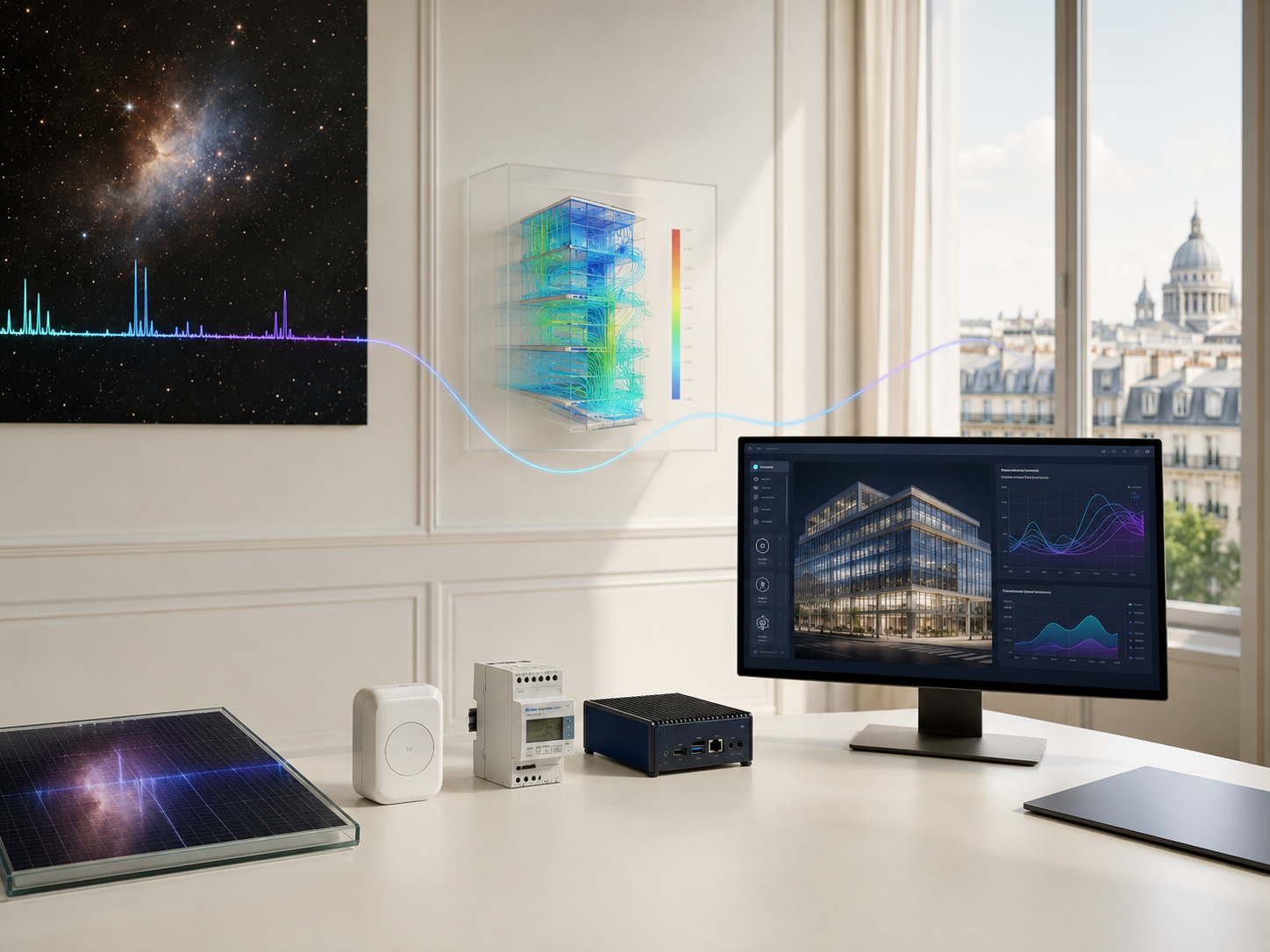
From astrophysics and scientific computing
to intelligent buildings
Hoordad was founded by Maryam H. Roodsari, a physicist and software and machine-learning engineer whose background spans astrophysics, scientific instrumentation, data engineering and operational software systems.
In astrophysics, complex environments cannot be understood from a single signal alone.
Reliable interpretation requires multiple observations, physical context, modelling, uncertainty
and continuous validation.
Buildings present a related challenge. Their behaviour emerges from weather, occupancy, equipment, control logic, energy flows, comfort requirements and human decisions.
Treating those signals separately produces dashboards. Interpreting them together creates operational intelligence.
Every operational action should be understandable, bounded, and measurable.
Intelligence becomes valuable
when it can prove its effect
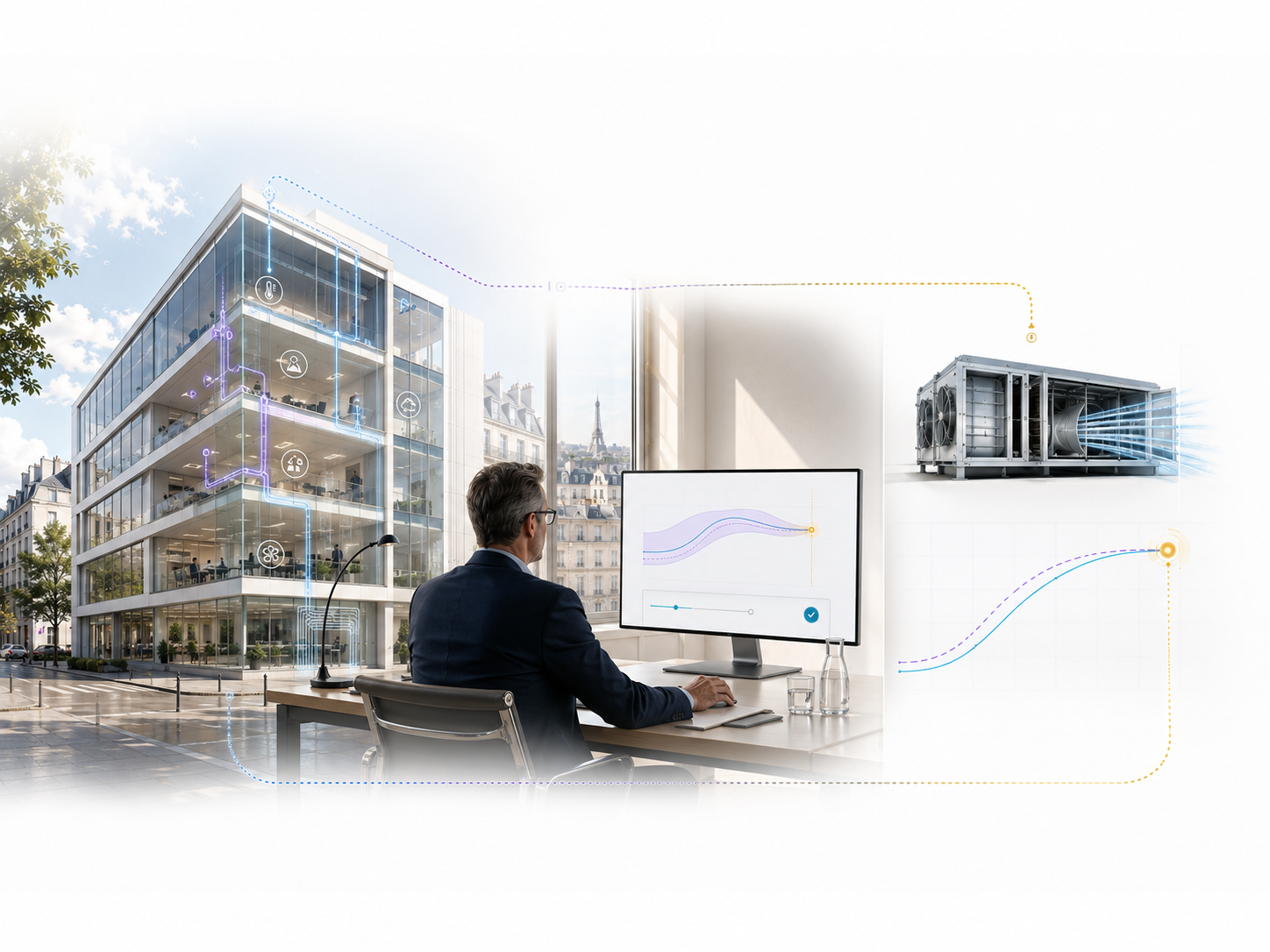
Hoordad’s approach does not end with a forecast or recommendation.
A useful operational system must preserve the context behind a decision, respect technical and operational boundaries, involve the operator where required, and compare the expected outcome with the measured result.
Context → Forecast → Bounded decision → Operator approval → Action → Measurement
The objective is not autonomous control for its own sake.
It is a disciplined path from building data to accountable operational improvement.

One intelligence foundation.
Three product directions.
Hoordad progresses from operational intelligence at building level to active architectural surfaces and portfolio-wide learning.
From architecture to field proof

Hoordad is currently developing the Orbit MVP, a controlled demonstrator and the framework for its first pilot collaborations in France.
The immediate objective is to validate one clearly bounded operational use case using real or representative building data,
operator-reviewed recommendations and measurable evidence.
The company is working with specialised software, embedded-systems and industrial partners to prepare the path
from prototype to pilot and later deployment.
ORBIT MVP
Operational workflow, data integration,
and proof interface.
CONTROLLED DEMONSTRATOR
Sensors, edge connectivity, energy data,
and representative systems.
FIRST PILOTS
Defined use cases, agreed baselines, operating boundaries, and verification methods.

BUILD THE FIRST PROOF
Turn one operational challenge into measurable evidence